
Instruments · वाद्य
Instruments of Indian music
The Natya Shastra sorts instruments into four classes by what makes the sound: a stretched string (tata), air in a hollow body (sushira), a skin over a drum (avanaddha), or a solid body that rings when struck (ghana).1,2,3 The 40 instruments below follow those four classes. Open one to see its parts, how it is tuned and played, its place in the music and the players who made it known.
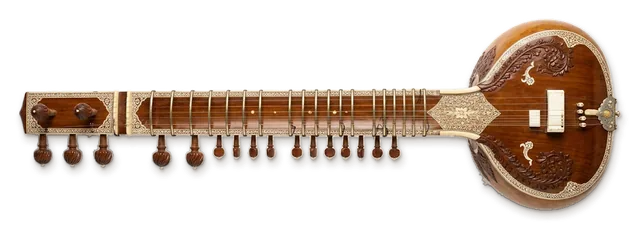
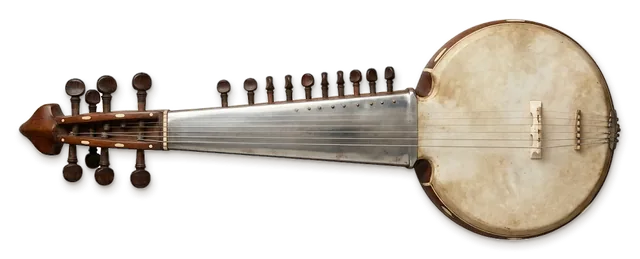
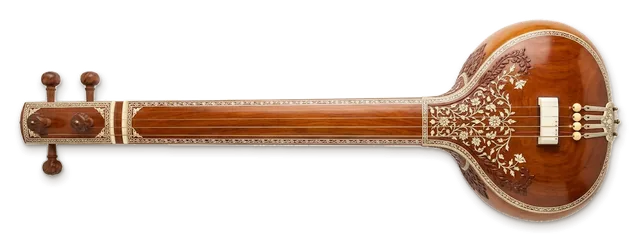
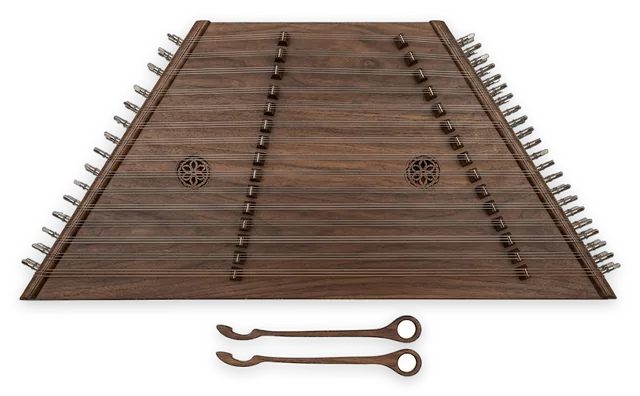
First lessons: sitar, sarod, tanpura, santoor, bansuri, harmonium, tabla and pakhawaj.
Strings · Tata तत
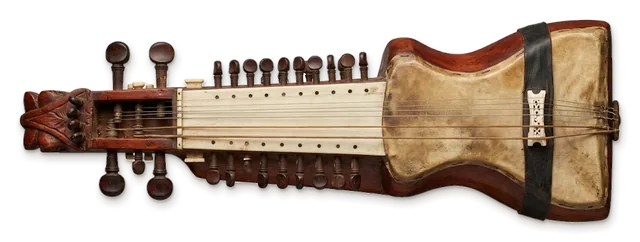
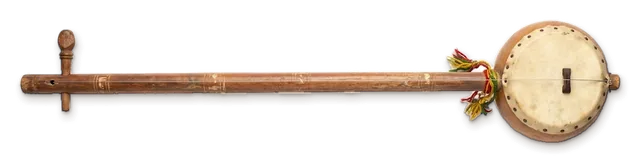
19 instrumentsA stretched string makes the sound, plucked, bowed or struck. The Sanskrit word tata means “stretched”.1
Wind · Sushira सुषिर
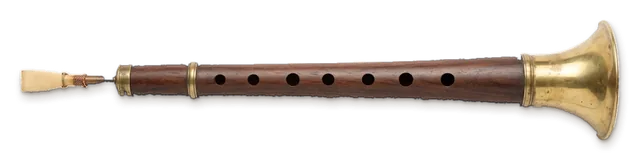
7 instrumentsA column of air inside a hollow body makes the sound. The Sanskrit word sushira means “hollow”.1

Drums · Avanaddha अवनद्ध
9 instrumentsA skin stretched over a hollow body makes the sound. The Sanskrit word avanaddha means “covered”.1
Solid · Ghana घन
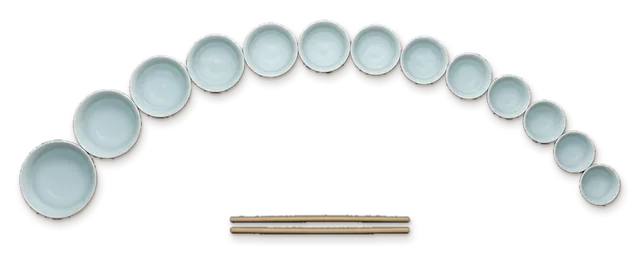
5 instrumentsThe body itself, of metal, wood or clay, rings when it is struck. The Sanskrit word ghana means “solid”.1
Sources
The numbers above point to these sources; each instrument page lists its own.
- Wikipedia contributors. Musical instrument classification (section "Indian"). Wikipedia.
- Wikipedia contributors. Natya Shastra (section "Music and musical instruments"). Wikipedia.
- Bimalakanta Roychaudhuri. The Dictionary of Hindustani Classical Music. Motilal Banarsidass, Delhi, 2000, p. 161–162 ("Vadya").