
Strings · Tata · Hammered
Santoor संतूर
Also called shatatantri vina
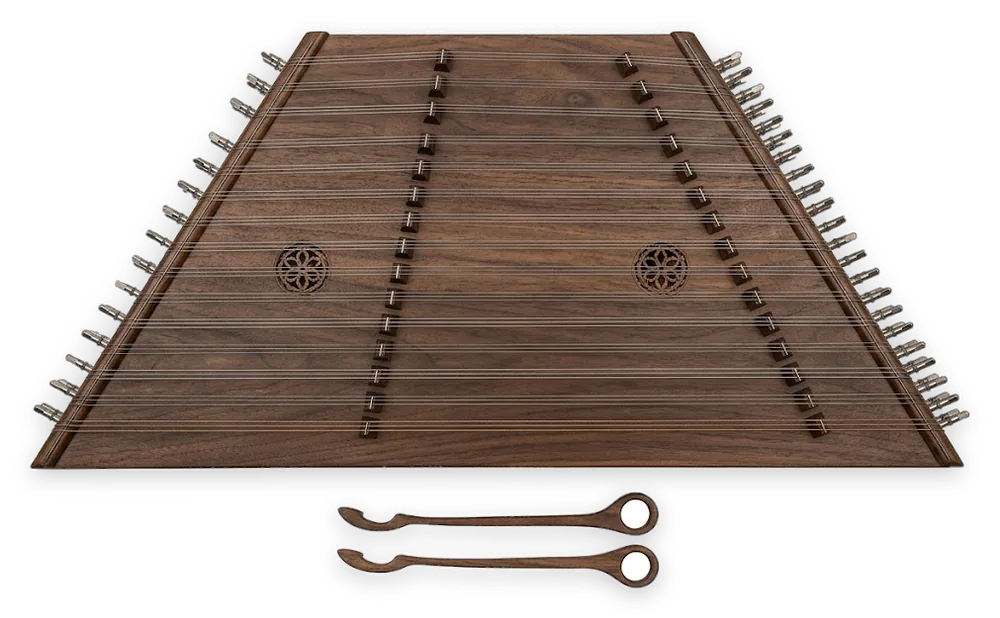
The santoor is a trapezoid box of strings from Kashmir, struck with two light wooden mallets.1
Play the santoor
Course2 of 15SaसाMalletLeft
Tap a note to hear it. The courses are tuned to the raga, lowest at the bottom: N. S R G M P D N S' R' G' M' P' D' N'. More about Raag Yaman
- Class
- Strings (Tata)
- Sound
- Metal strings struck with two light wooden mallets
- Region
- Kashmir
- Tradition
- Kashmir and Hindustani
Learn to play the santoor
Parts of the santoor
The frame is usually walnut. The Indian santoor has 25 bridges with four strings each, 100 strings in all, in two sets of bridges that give about three octaves. The strings are tied to pins on the left side and tuned with steel pins on the right, one unit of strings to each note.1
How the santoor is held and played
The player sits in the half-lotus pose (ardha-padmasana) with the santoor on the lap, its broad side towards the waist. The mallets (mezrab) are held between the index and middle fingers. Striking near a bridge or a little away from it changes the tone, and one hand can damp the other's notes with the palm.1
The santoor in the music
In Kashmir it accompanied folk music and Sufiana Mausiqi, the Sufi music of the valley.1
History of the santoor
Old Sanskrit texts mention a shatatantri vina, a "hundred-stringed vina", which Wikipedia identifies with the santoor. It is a variation of the Iranian santur, which usually has fewer strings.1
Santoor lessons
Short lessons, one skill each, in order. Each one ends with something to practise.
Sources and further reading
The numbers in the text point to these sources. Where they disagree, the text says so.
- Wikipedia contributors. Santoor. Wikipedia.