Vishnu is a rare 17-matra taal in five vibhags of 2, 3, 4, 4 and 4: claps on the 1st, 3rd, 6th and 10th matras, a wave on the 14th. It comes from the pakhawaj repertoire.
Also written: Vishnu Taal, Vishnu Tal, Vishnutal
Matras
17
Vibhags
5 (2 + 3 + 4 + 4 + 4)
Tali on matra
1, 3, 6, 10
Khali on matra
14
× is sam, the first beat, where you clap. A number is another clap (tali); 0 is khali, where you wave the hand instead. Set Tabla Sa to the Sa of your harmonium or tanpura to practise along.
Vishnu theka
80 a minute
Bayan · leftGeDhinDayan · rightTin
Dhin: right hand Tin and left hand Ge
1Dhinधिं×sam
2Naना
3Dhinधिं2tali
4Dhinधिं
5Naना
6Dhinधिं3tali
7Trikतृक
8Dhiधी
9Naना
10Dhinधिं4tali
11Dhinधिं
12Naना
13Dhinधिं
14Dhiधी0khali
15Naना
16Dhiधी
17Naना
Play the tabla
Left hand
Right hand
Bols
Vishnu theka (bol)
The theka is the basic pattern of tabla bols that marks out one cycle of the taal. Play it at the top of the page and follow the beat.1,10
Bols in English letters
Dhin Na | Dhin Dhin Na | Dhin Trik Dhi Na | Dhin Dhin Na Dhin | Dhi Na Dhi Na
Bols in Hindi (Devanagari)
धिं ना | धिं धिं ना | धिं तृक धी ना | धिं धिं ना धिं | धी ना धी ना
How to play the strokes of Vishnu
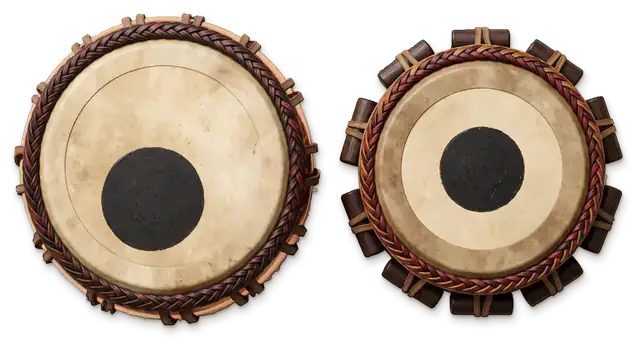
Each bol is one stroke, or two struck together: the right hand on the dayan, the smaller drum, and the left hand on the bayan, the bigger one. An open stroke lifts off so the drum rings; a closed stroke stays down, so the sound stops at once. Tap a bol to hear it and see where the fingers land on the drums.
right hand Tin (open) + left hand Ge (open)
Tin: Index finger strikes the open skin just outside the black patch and lifts; the ring and little fingers rest as for Na. A softer tone that rings longer than Na.
Ge: Middle and ring fingers strike the open skin beyond the black patch and lift, the wrist resting on the head. The bass rings.
right hand Na (open)
Na: Index finger strikes the rim (kinar) and lifts; the ring and little fingers rest on the edge of the black patch. Bright and ringing, and soon gone.
right hand Ti (closed), then right hand Ra (closed), then left hand Ka (closed)
Ti: Middle and ring fingers strike the middle of the black patch and stay down. Short and dry. Inside quick runs such as TiRaKiTa and TiTa; the Ta at the end of TiRaKiTa and KiTa is the same dry stroke, often with the ring and little fingers at the edge of the patch.
Ra: Index finger strikes the black patch and stays down. Short and dry, a little brighter than Ti.
Ka: The flat hand slaps the bayan and stays down. No ring, no bass.
right hand Tin (open) + left hand Ge (open)
Tin: Index finger strikes the open skin just outside the black patch and lifts; the ring and little fingers rest as for Na. A softer tone that rings longer than Na.
Ge: Middle and ring fingers strike the open skin beyond the black patch and lift, the wrist resting on the head. The bass rings.
The nine single strokes
Right hand, on the dayan (the smaller drum)
Open. Index finger strikes the rim (kinar) and lifts; the ring and little fingers rest on the edge of the black patch. Bright and ringing, and soon gone.
Open. Index finger strikes the open skin just outside the black patch and lifts; the ring and little fingers rest as for Na. A softer tone that rings longer than Na.
Open. Index finger strikes the middle of the black patch (syahi) and lifts at once, with no finger resting. A deep, singing ring.
Open. The four fingers together strike the black patch and lift at once, so the drum rings under a soft slap.
Closed. Middle and ring fingers strike the middle of the black patch and stay down. Short and dry. Inside quick runs such as TiRaKiTa and TiTa; the Ta at the end of TiRaKiTa and KiTa is the same dry stroke, often with the ring and little fingers at the edge of the patch.
Closed. Index finger strikes the black patch and stays down. Short and dry, a little brighter than Ti.
Left hand, on the bayan (the bigger drum)
Open. Middle and ring fingers strike the open skin beyond the black patch and lift, the wrist resting on the head. The bass rings.
Open. Ge, then the heel of the hand presses forward on the head so the bass slides up in pitch. Players add this slide by choice, often on the last bass stroke before sam; a written Ghe is usually a plain Ge.
Closed. The flat hand slaps the bayan and stays down. No ring, no bass.
Clap on the 1st matra, sam (X), on Dhin. The first vibhag has only two matras, so the second clap (2) comes at once on the 3rd matra. Count three matras and clap again (3) on the 6th, where Dhin Trik Dhi Na begins; count four more and clap (4) on the 10th. On the 14th matra wave the hand: this is the khali (0), where the four bols Dhi Na Dhi Na lead back to sam.
The vibhag before khali ends on a Dhin at the 13th, so the change to Dhi Na Dhi Na marks the wave. Counting the groups aloud, two, three, four, four, four, a few times before playing helps to feel where sam returns.
How each bol is played
Bol
How it is played
Dhin
both drums: the open, ringing Tin of the dayan (ring finger resting on the syahi, index finger striking the lav and bouncing off) sounded together with Ge or Ghe on the bayan (tip of the index or middle finger on the bayan's syahi, left to ring)5,14
Na
dayan only: the ring finger rests at the edge of the syahi and the tip of the index finger strikes the chanti (rim); played this way it is a closed stroke6,14
Dhi
both drums, the same pair of strokes as Dhin: Ge or Ghe on the bayan with the ringing Tin on the dayan; the shorter spelling is used when Na follows straight after14
Trik
the quick, shortened form of TiRaKiTa, all damped: Ti and Ra pressed into the middle of the dayan's syahi (middle and ring fingers together, then the index finger), then a closed Ka5,7
Vishnu in dugun, tigun and chaugun
Layakari fits the theka more than once into one cycle. Here the whole theka is repeated, starting on sam: twice for dugun, three times for tigun and four times for chaugun. Bols under one arc share a matra. Play keeps the matra at the tempo set at the top of the page, so the bols come two, three or four times as fast.
Vishnu dugun (दुगुन): two bols in every matra
80 a minute
1Dhin Naधिं ना×sam
2Dhin Dhinधिं धिं
3Na Dhinना धिं2tali
4Trik Dhiतृक धी
5Na Dhinना धिं
6Dhin Naधिं ना3tali
7Dhin Dhiधिं धी
8Na Dhiना धी
9Na Dhinना धिं
10Na Dhinना धिं4tali
11Dhin Naधिं ना
12Dhin Trikधिं तृक
13Dhi Naधी ना
14Dhin Dhinधिं धिं0khali
15Na Dhinना धिं
16Dhi Naधी ना
17Dhi Naधी ना
Vishnu tigun (तिगुन): three bols in every matra
80 a minute
1Dhin Na Dhinधिं ना धिं×sam
2Dhin Na Dhinधिं ना धिं
3Trik Dhi Naतृक धी ना2tali
4Dhin Dhin Naधिं धिं ना
5Dhin Dhi Naधिं धी ना
6Dhi Na Dhinधी ना धिं3tali
7Na Dhin Dhinना धिं धिं
8Na Dhin Trikना धिं तृक
9Dhi Na Dhinधी ना धिं
10Dhin Na Dhinधिं ना धिं4tali
11Dhi Na Dhiधी ना धी
12Na Dhin Naना धिं ना
13Dhin Dhin Naधिं धिं ना
14Dhin Trik Dhiधिं तृक धी0khali
15Na Dhin Dhinना धिं धिं
16Na Dhin Dhiना धिं धी
17Na Dhi Naना धी ना
Vishnu chaugun (चौगुन): four bols in every matra
80 a minute
1Dhin Na Dhin Dhinधिं ना धिं धिं×sam
2Na Dhin Trik Dhiना धिं तृक धी
3Na Dhin Dhin Naना धिं धिं ना2tali
4Dhin Dhi Na Dhiधिं धी ना धी
5Na Dhin Na Dhinना धिं ना धिं
6Dhin Na Dhin Trikधिं ना धिं तृक3tali
7Dhi Na Dhin Dhinधी ना धिं धिं
8Na Dhin Dhi Naना धिं धी ना
9Dhi Na Dhin Naधी ना धिं ना
10Dhin Dhin Na Dhinधिं धिं ना धिं4tali
11Trik Dhi Na Dhinतृक धी ना धिं
12Dhin Na Dhin Dhiधिं ना धिं धी
13Na Dhi Na Dhinना धी ना धिं
14Na Dhin Dhin Naना धिं धिं ना0khali
15Dhin Trik Dhi Naधिं तृक धी ना
16Dhin Dhin Na Dhinधिं धिं ना धिं
17Dhi Na Dhi Naधी ना धी ना
About Vishnu
Vishnu taal is a cycle of 17 matras. Sangeet Visharad cuts it into vibhags of two, three, four, four and four matras, with claps at sam and on matras 3, 6 and 10 and a single wave on the 14th. The short opening vibhag of two matras, followed by one of three, gives the cycle a quick, uneven start before it settles into three even groups of four.
Tal Prakash (Bhagwat Sharan Sharma, 1963) places Vishnu with Shikhar, Chudamani and other 17-matra taals of the dhrupad style. Since they belong to the pakhawaj, their bols lean on pakhawaj strokes, though the usual tabla forms can be fitted to them too: mukhdas, parans, relas, tihais and chakradars.
The theka above is the one Sangeet Visharad prints, built almost entirely from Dhin, Dhi and Na with a single Trik. Other books print quite different thekas under the same name: The Art of Tabla Playing reworks the second half with TiRaKiTa, and Tal Prakash gives a pakhawaj theka in six vibhags. A student should know which of these the examiner follows.
tabla compositions on its 17 matras: mukhda, paran, rela, tihai and chakradar
the syllabus of higher tabla classes, though it is rarely played today
History
Sangeet Visharad names Vishnu among the difficult taals once played on the pakhawaj, with Brahma, Rudra, Lakshmi and Sawari, and says the instrument was heard far less once the tabla came into use. Ma'arif-un-Naghmat records Vishnu in its table of taals from the old treatises, written in the old signs for laghu, druta and guru. The Art of Tabla Playing counts Vishnu among the taals seldom heard now that are still part of the syllabus for higher classes.
Where teachers and books differ
marks: Sangeet Visharad and Sangtar mark the 14th matra as khali (X 2 3 4 0). The Art of Tabla Playing marks it as a fifth clap (X 2 3 4 5) and has no khali at all.1,8,11
theka: The Art of Tabla Playing keeps the same vibhags and the opening Dhin Na | Dhin Dhin Na, but its third vibhag is Dhin TiRaKiTa Dhin Na where Sangeet Visharad has Dhin Trik Dhi Na, and its last two vibhags are TiRaKiTa Dhin Dhin Na and TiRaKiTa TuNa KatTa TiRaKiTa instead of Dhin Dhin Na Dhin and Dhi Na Dhi Na.1,8
vibhags: Tal Prakash prints a quite different 17-matra Vishnu in pakhawaj bols (Dha - Ki Ta | Ta Ka | Dhu Ma Ki Ta | Ta Ka | Dhe - | Dhi Na Ta), counted in six vibhags of 4, 2, 4, 2, 2 and 3 with claps on all six and no khali.2
matras: Besides the 17-matra taal, Tal Prakash gives another Vishnu of 36 matras, marked as a different type, in twelve vibhags. Ma'arif-un-Naghmat's table of taals from the old treatises also has two entries named Vishnu, the second called another type.2,13
Vishnu variations
Theka in The Art of Tabla Playing
80 a minute
1Dhinधिं×sam
2Naना
3Dhinधिं2tali
4Dhinधिं
5Naना
6Dhinधिं3tali
7Ti Ra Ki Taतिरकिट
8Dhinधिं
9Naना
10Ti Ra Ki Taतिरकिट4tali
11Dhinधिं
12Dhinधिं
13Naना
14Ti Ra Ki Taतिरकिट0khali
15Tu Naतूना
16Kat Taकत्ता
17Ti Ra Ki Taतिरकिट
Same vibhag lines as the Visharad theka. TiRaKiTa stands where Trik was, the 8th matra is Dhin instead of Dhi, the last two vibhags are new, and the 14th matra takes a fifth clap instead of khali.8
Pakhawaj-style theka in Tal Prakash
Dha - Ki Ta | Ta Ka | Dhu Ma Ki Ta | Ta Ka | Dhe - | Dhi Na Ta
धा ऽ कि ट | त क | धु म कि ट | त क | धे ऽ | धि न ता
Counted in six vibhags of 4, 2, 4, 2, 2 and 3 matras, with claps marked X, 2, 3, 4, 5 and 6 and no khali; each syllable takes a full matra.2
Taals similar to Vishnu, and how to tell them apart
Both have 17 matras, and Tal Prakash groups them together as dhrupad-style pakhawaj taals. In Sangeet Visharad, Shikhar has four vibhags of 6, 6, 2 and 3, khali on the 7th matra and claps on 1, 13 and 15, with pakhawaj bols such as Thu Ga, Dhum Kit and Gadi Gin. Vishnu, printed on the same page, splits its 17 matras into five unequal groups (2, 3, 4, 4, 4), claps on 1, 3, 6 and 10, waves on the 14th, and keeps to Dhin, Dhi and Na with one Trik.1,3
Common mistakes when learning Vishnu
Giving the first vibhag three or four matras. It has only two (Dhin Na), so the second clap falls on the 3rd matra.
Clapping on the 14th matra when following the Sangeet Visharad grid. There it is the khali, a wave; The Art of Tabla Playing is the book that claps there.
Mixing up Vishnu and Shikhar because both have 17 matras. Shikhar opens with two long vibhags of six and waves on the 7th; Vishnu's wave comes late, on the 14th.
Building a tihai with 16-matra habits. In these 17-matra taals Tal Prakash builds it from a six-matra phrase ending on Dha, played three times.
Questions about Vishnu
Vishnu taal mein kitni matraen hoti hain?
Vishnu taal has 17 matras, grouped in Sangeet Visharad as 2 + 3 + 4 + 4 + 4.
Vishnu taal ka theka kya hai?
In Sangeet Visharad the theka is Dhin Na | Dhin Dhin Na | Dhin Trik Dhi Na | Dhin Dhin Na Dhin | Dhi Na Dhi Na. In Hindi: धिं ना | धिं धिं ना | धिं तृक धी ना | धिं धिं ना धिं | धी ना धी ना.
Vishnu taal mein tali aur khali kis matra par hai?
Claps fall on the 1st (sam), 3rd, 6th and 10th matras and the khali on the 14th, as in Sangeet Visharad and Sangtar. The Art of Tabla Playing puts a fifth clap on the 14th instead of a khali.
Vishnu taal aur Shikhar taal mein kya antar hai?
Both have 17 matras. Shikhar splits them 6 + 6 + 2 + 3 with khali on the 7th and uses pakhawaj bols; Vishnu splits them 2 + 3 + 4 + 4 + 4 with khali on the 14th and uses Dhin, Dhi and Na.
Vishnu taal kahan bajaya jata hai?
It belongs to the dhrupad style and was played on the pakhawaj. Tal Prakash adds that the tabla's own compositions, such as parans, tihais and chakradars, can be built on it. Today it is seldom heard, but it is part of the syllabus for higher tabla classes.
Vishnu taal mein tihai kaise banaen?
Take a six-matra phrase that ends on Dha and play it three times: 6 × 3 = 18, so the last Dha lands on the 18th matra, which is the sam of the next cycle. This is the rule Tal Prakash gives for its 17-matra taals.
Kya 36 matra ka Vishnu taal bhi hota hai?
Yes. Tal Prakash prints a second Vishnu of 36 matras in twelve vibhags, marked as another type, besides its 17-matra Vishnu. Sangeet Visharad and The Art of Tabla Playing give Vishnu with 17 matras.