
Raag Todi
Todi's Ga is one of the best-known examples of a note with its own shruti. Parrikar stresses how komal Re and komal Ga are voiced and joined, the one gradually melting into the other; without that, he writes, Todi would be lifeless.1,3
Hear the pitches near komal Re on four instruments, then follow the note into a raag.
Komal Re in raag phrases ↓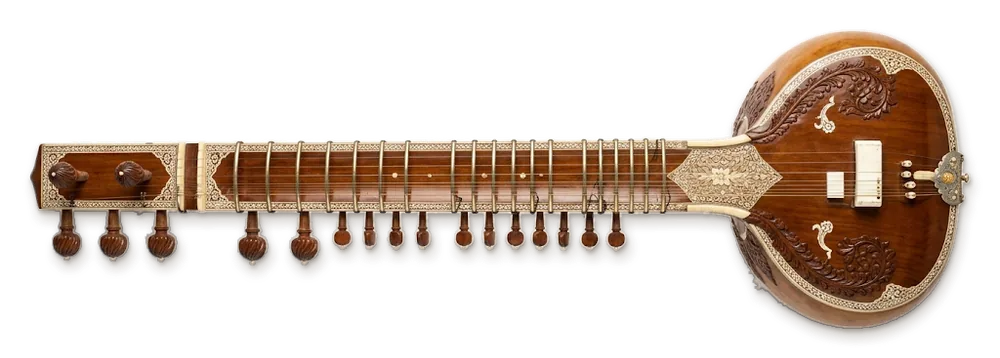
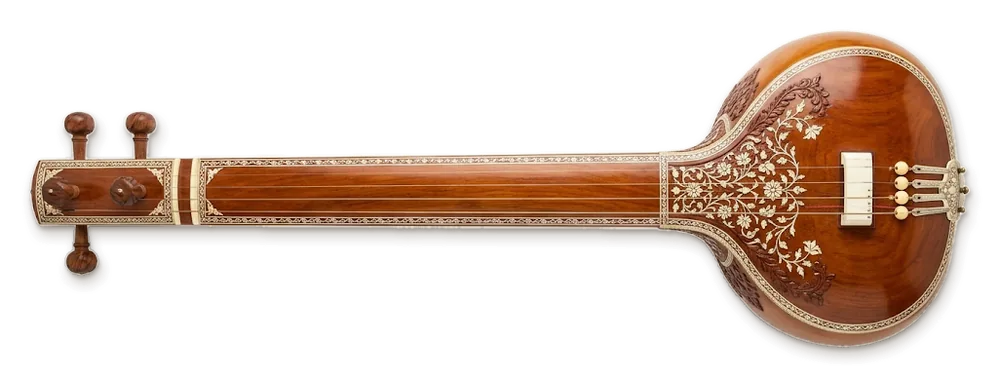
Tap a pitch to hear it on the selected instrument. The keyboard button plays the equal-tempered reference. The sitar highlights the nearest fret.
The ratios come from the 22-shruti reference table.1 In performance, the pitch can vary with the musician and the phrase.2
Todi's Ga is one of the best-known examples of a note with its own shruti. Parrikar stresses how komal Re and komal Ga are voiced and joined, the one gradually melting into the other; without that, he writes, Todi would be lifeless.1,3
Bhairav's Re is one of the best-known examples of a note with its own shruti. In the descent it is sung with a slow swing (andolan), and Parrikar calls that swinging Re the raga's signature; Dha gets the same treatment.1,4
Listen for the touch of Ga on Shree’s komal Re and the meend that joins Re and Pa in both directions. Those movements shape how Re is heard in the raag.5,6